
- Schedule Appointment
- (914) 632- 1111
- office@drcomodds.com

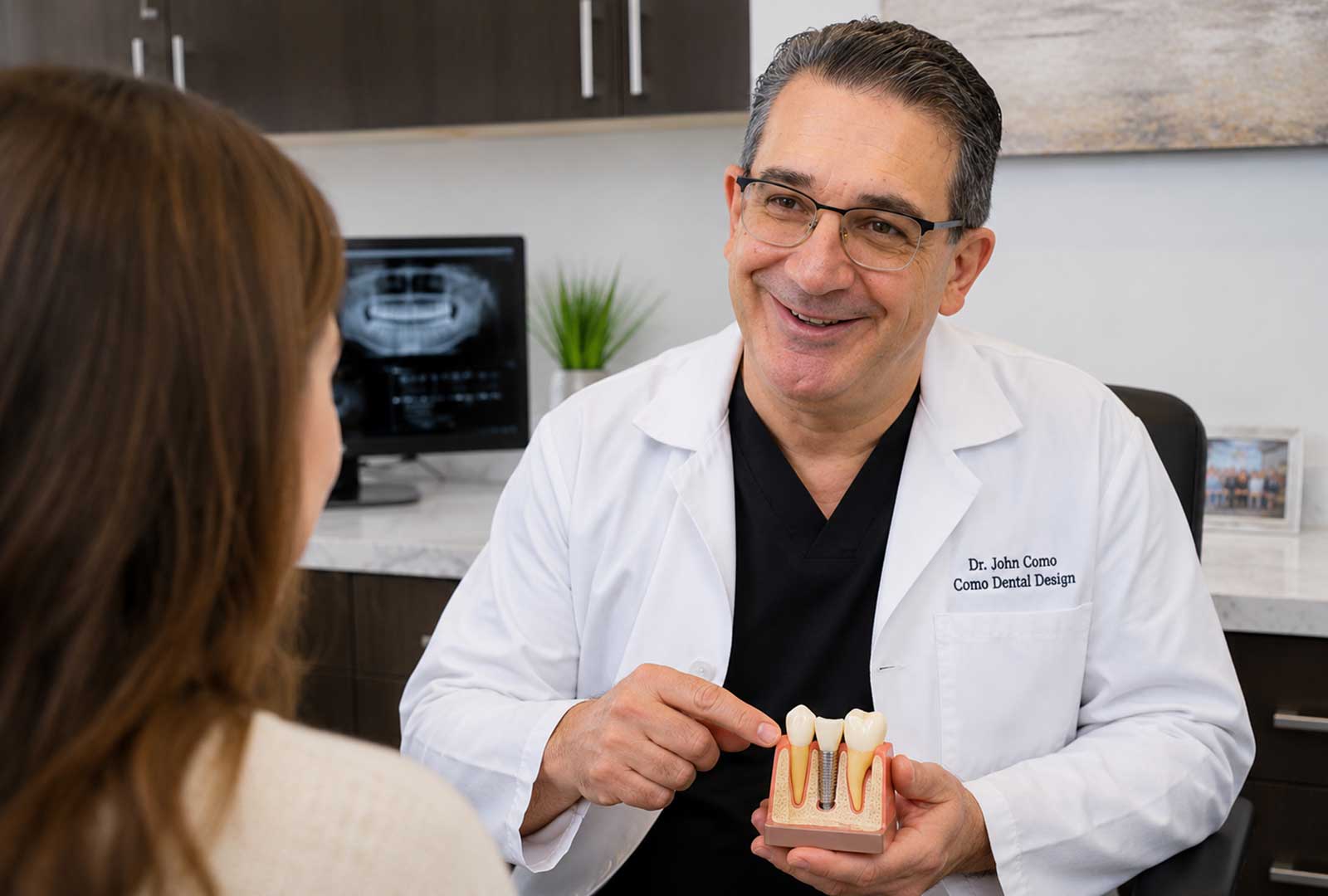
Patients considering dental implants in New Rochelle, Larchmont, Mamaroneck, and throughout Lower Westchester often ask what factors can affect implant healing and long-term success. Along with bone quality, gum health, and surgical technique, certain medications may also play a role.
Among the most discussed today are GLP-1 medications such as Ozempic®, Wegovy®, Victoza®, and Saxenda®, which are increasingly being studied for their potential influence on bone health, nutrition, inflammation, and healing.
That leads many patients to ask an important question:
Can GLP-1 medications affect dental implant treatment and healing?
At Como Dental Design, we believe successful dental implant treatment begins with understanding the whole patient, not just the missing tooth. Your overall health, medications, nutrition, gum health, and bone quality all play important roles in achieving predictable, long-term results.
Dental implants have become the gold standard for replacing missing teeth because they are designed to function like natural tooth roots. For an implant to succeed, it must integrate with the surrounding jawbone through a process known as osseointegration.
Simply put, the implant and bone must heal together.
The stronger the connection between the implant and bone, the more stable and durable the final restoration becomes. This is why patients seeking dental implants in New Rochelle or Lower Westchester should receive a comprehensive evaluation before treatment begins.
At Como Dental Design, every implant case is planned with the end result in mind: a healthy, functional, natural-looking smile designed to last. This may include a review of your medical history, digital imaging, bone assessment, bite evaluation, and a personalized treatment plan using modern dental technology.
GLP-1 receptor agonists are commonly prescribed for diabetes management and weight loss. According to the Cleveland Clinic, these medications can help regulate blood sugar, appetite, and digestion.
Researchers have also identified GLP-1 receptors in several tissues throughout the body, including bone. While research is ongoing, laboratory and clinical studies suggest GLP-1 medications may influence the body’s natural bone remodeling process.
Some studies suggest that GLP-1 medications may stimulate osteoblasts, the cells responsible for building new bone. Since dental implant success relies on healthy bone formation around the implant, researchers are exploring whether this effect may contribute to improved healing.
GLP-1 medications may also help suppress osteoclast activity, the cells responsible for bone resorption. Preserving bone density is critical for maintaining implant stability over time.
Chronic inflammation can contribute to periodontal disease and peri-implant bone loss. Researchers have observed anti-inflammatory effects associated with GLP-1 receptor agonists, which may potentially support healthier tissues around implants.
For patients considering dental implants in New Rochelle, these findings are promising, as anything that supports bone and tissue health may ultimately contribute to more predictable treatment outcomes.
While the science is interesting, it is important to remain realistic.
Current evidence does not prove that GLP-1 medications directly improve dental implant success or accelerate osseointegration. However, some retrospective studies have reported lower levels of peri-implant marginal bone loss among patients taking GLP-1 medications compared to certain diabetic patients managed with other therapies.
In other words, researchers are seeing encouraging trends, but more studies are needed before definitive conclusions can be made.
This is why choosing an experienced implant dentist is so important. Treatment decisions should always be based on proven clinical principles, comprehensive diagnostics, and individualized patient care rather than a single medication or trend. You can learn more about Dr. Como’s background and advanced implant training on the Meet Dr. Como page.
Although GLP-1 medications may offer potential benefits, they can also create challenges that should be discussed before implant surgery.
Many patients taking GLP-1 medications experience significant appetite suppression. While weight loss may improve overall health, proper healing after dental implant surgery requires adequate protein, vitamins, and minerals.
Bone cannot regenerate effectively without the nutrients required to build it.
At Como Dental Design, we review each patient’s medical history and overall health to help identify factors that could affect healing and implant success. This whole-patient approach is part of what makes comprehensive advanced dental rejuvenation so important for complex restorative cases.
Some patients experience dry mouth while taking GLP-1 medications. Reduced saliva can increase the risk of gum disease, tooth decay, and peri-implant inflammation.
Because healthy gums are essential for healthy implants, preventive care and regular maintenance become even more important. If you are taking a GLP-1 medication, regular dental exams, professional cleanings, and early treatment of gum inflammation can help protect both your natural teeth and dental implants.
You can also read our related article, Do GLP-1 Medications Affect Your Teeth? What Patients Should Know, for more information about oral health risks connected to these medications.
One of the most common misconceptions about dental implants is that implant success depends on a single factor.
In reality, successful implant treatment is a combination of:
This brings us back to the same principle we emphasize with every patient: successful implants begin long before the implant is placed.
The better we understand your overall health, the more predictable your outcome can be.
Yes, many patients taking Ozempic® or other GLP-1 medications may still be candidates for dental implants. Your dentist should evaluate your overall health, bone quality, nutrition, gum health, and healing potential before treatment.
Researchers are actively studying the relationship between GLP-1 medications and bone metabolism. While some findings suggest possible effects on bone health and inflammation, more research is needed before dentists can say these medications directly improve or reduce implant success.
You should never stop taking a prescription medication without speaking to your physician. If you are planning dental implant treatment, tell your dentist and medical provider about all medications you take so they can coordinate care when needed.
Significant weight loss can affect nutrition, hydration, and overall health. Because dental implant healing depends on adequate protein, vitamins, minerals, and healthy tissue response, nutrition should be part of your pre-surgical discussion.
Tell your dentist about any medications you take, including GLP-1 medications, diabetes medications, osteoporosis medications, blood thinners, supplements, and recent changes in weight or appetite. This helps your dental team plan your treatment safely and effectively.
If you are missing teeth, wearing a removable denture, or have been told you may need extractions, now is the ideal time to explore your options.
At Como Dental Design, we provide comprehensive dental implant consultations using advanced diagnostics and evidence-based treatment planning. Whether you are taking Ozempic®, Wegovy®, or another GLP-1 medication, we will evaluate your unique situation and develop a personalized treatment plan designed around your goals, health, and long-term success.
Many patients are surprised to learn they may be candidates for dental implants even after years of missing teeth.
The first step is simply having the conversation.
If you are looking for dental implants in New Rochelle or anywhere in Lower Westchester, contact Como Dental Design today to schedule a consultation and learn how implant dentistry can help restore your smile, confidence, and quality of life.